terça-feira, 10 de agosto de 2010

Octopus - Octopus 1969

 id=Octopus's modest stature with collectors is due to the fact that they recorded for the ESP label, which specialized in some of the strangest rock, jazz, and avant-garde music of the 1960s (the Fugs were their most famous rock band). If not for that happenstance, it's doubtful that their self-titled LP (from 1969) would be a sought-after item. The band, which from the sound of things were very young, played typical late-'60s hard rock-psychedelia, with long bluesy jams and some anti-establishment lyrics. Tom Miller's tenor sax added a raw jazzy feel to some of the instrumentation, but otherwise there was nothing notable about their material or approach. AllMusic.

listen here

FR style= / USA style= / UK style=

sexta-feira, 6 de agosto de 2010

Albert King - Born Under A Bad Sign 1967

 id=Albert King recorded a lot in the early '60s, including some classic sides, but they never quite hit the mark. They never gained a large audience, nor did they really capture the ferocity of his single-string leads. Then he signed with Stax in 1966 and recorded a number of sessions with the house band, Booker T. & the MG's, and everything just clicked. The MG's gave King supple Southern support, providing an excellent contrast to his tightly wound lead guitar, allowing to him to unleash a torrent of blistering guitar runs that were profoundly influential, not just in blues, but in rock & roll (witness Eric Clapton's unabashed copping of King throughout Cream's Disraeli Gears). Initially, these sessions were just released as singles, but they were soon compiled as King's Stax debut, Born Under a Bad Sign. Certainly, the concentration of singles gives the album a consistency — these were songs devised to get attention — but, years later, it's astounding how strong this catalog of songs is: "Born Under a Bad Sign," "Crosscut Saw," "Oh Pretty Woman," "The Hunter," "Personal Manager," and "Laundromat Blues" form the very foundation of Albert King's musical identity and legacy. Few blues albums are this on a cut-by-cut level; the songs are exceptional and the performances are rich, from King's dynamic playing to the Southern funk of the MG's. It was immediately influential at the time and, over the years, it has only grown in stature as one of the very greatest electric blues albums of all time. AllMusic.

listen here

FR style= / USA style= / UK style=
Bryan MacLean - Ifyoubelievein 1966-72
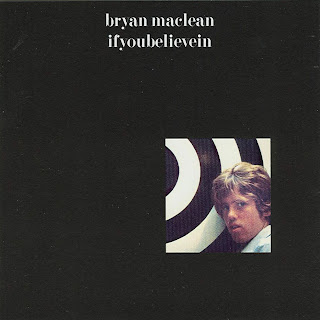
 id=The release of these previously unissued acoustic solo demos was a minor revelation for Love fans. Ten of the 16 tracks were recorded in 1966 and 1967, including early versions of "Old Man" and "Orange Skies," as well as eight songs that never made it onto Love's '60s albums. Of the remaining six cuts, five were recorded in 1982, and one (a version of "Alone Again Or") in 1972, although all of these were also composed in the 1960s. MacLean's best songs are still "Alone Again Or" and "Old Man," the two compositions that ended up on Forever Changes (an excellent demo of "Old Man" concludes the CD). The set as a whole, however, reveals a singer-songwriter who was comparable to few other '60s rockers, in his fey melodicism (with little if any blues/R&B influence), transmutation of folk and flamenco influences into more pop- and rock-based structures, unexpectedly rapid key changes and irregular lyric meter, and guileless vocals, which are unaffected to the point of naivete. It's kind of like a cross between Joni Mitchell and Jose Feliciano. Even if relatively few MacLean compositions were permitted to interefere with Arthur Lee's material on Love's early albums, it seems likely that MacLean had a substantial influence on Lee's writing and, more noticeably, the Johnny Mathis-like vocal delivery that characterized Lee's vocals on Forever Changes. Presumably, lines such as "ladies should be used and simply tossed aside like worn-out shoes" (from "Strong Commitment") make the composer wince today, but there are some good songs here, such as "Fresh Hope," "Kathleen," and "She Looks Good," that would have been worthy inclusions on early Love LPs. The material from 1972 and 1982 is quite similar, in both quality and bare-bones production, to the earlier demos, for those who worry that the later stuff may be too dissimilar from the '60s performances to merit investigation. AllMusic.

listen here

FR style= / USA style= / UK style=

quinta-feira, 5 de agosto de 2010

Cat Mother & The All Night Newsboys - Albion-Doo Wah 1970

 id=Grassroots rockers Cat Mother & the All Night Newsboys formed in New York's Lower East Side in 1967 -- comprising singer/guitarist Larry Parker, lead guitarist Charlie Chin, bassist Roy Michaels, keyboardist Bob Smith, and drummer Michael Equine; By year's end they were regularly headlining the Café Wha?, and soon were ensconced as the house band at the famed Electric Circus. In 1969 the group signed to Polydor Records, with longtime friend Jimi Hendrix agreeing to produce their debut LP The Street Giveth and the Street Taketh Away -- supported by a series of appearances as Hendrix's opener, the record generated Cat Mother & the All Night Newsboys' lone Top 40 hit "Good Old Rock and Roll," a medley of pop classics from the late 1950s. Chin left the lineup soon after, and in an attempt to also sever ties with manager Michael Jeffrey, the remaining bandmembers traveled to San Francisco to record the follow-up, 1970s Albion Doowah, a pastoral, country-inspired effort featuring Paul Johnson on guitar and Jay Ungar on bass. Parker split soon after, and the remaining trio of Michaels, Smith and Equine returned to New York, abbreviating their name to simply Cat Mother and recruiting guitarist Charlie Prichard and percussionist Steve Davidson for their eponymous 1971 LP. Guitarist Charlie Harcourt replaced Prichard for Cat Mother's fourth and final album, 1973's aptly-titled Last Chance Dance, although the group continued playing live for several years to follow. AllMusic.

listen here

FR style= / USA style= / UK style=
Billy Hawks - More Heay Soul 1968

 id=Billy Hawks was a Philly-based Jazz/soul/blues Hammond B3 Player who played the Atlantic City circuit as well as around the world. Billy Hawks sings and plays organ, with a groove that’s in between jazz, blues and deep soul. He’s fronting a trio that includes a young Ivan “Boogaloo Joe” Jones on guitar and the group plays a few instrumentals with some excellent organ/guitar interchange. It is a bit bluesy, but there’s also still a relatively strong soul jazz component as well, one that comes through in the overall structure of the tunes and in the lean style in which they were recorded.

listen here

FR style= / USA style= / UK style=
A Passing Fancy - A Passing Fancy 1968

 id=A Passing Fancy was born out of Toronto's Yorkville Village scene in the mid sixties. In 1967 the band released its debut single I'm Losing Tonight, which immediately became a hit and scored high on the east coast charts. In 1968, A Passing Fancy released a self titled album on the independent Boo Records label that was well received and gathered good reviews. The Boo label, formed by two record store owners, only released the album in the Toronto area, so national fame and exposure eluded the band. The music on the album, A Passing Fancy, was British influenced pop with elements of psychedelia and an American garage sound. The band went through a couple of line up changes while recording the album but all musicians that worked on the album were credited in the album liner notes. The main songwriters in the band were Jay Telfer and brothers Fergus and Greg Hambleton. The songs were well written and the music was well played. Shortly after the release of the album, one more single followed, I Believe In Sunshine, which was also a hit. This single broke out across Canada and attracted interest south of the border as well as with some major labels but unfortunately it was too late and the band folded. Telfer and the Hambletons, in particular Fergus (as he went by for a time) went on to write more songs and record with other bands in the 70's. They also made a couple of solo albums that were well received and are still active today on the Canadian music scene. Greg Hambleton went on to form Axe Records while Fergus Hambleton continues to perform with his reggae band the Satellites. This reissue of the original Boo Records album by Pacemaker Records in association with the U.S. reissue label Timothy's Brain, is housed in a beautiful digipack case with original album artwork. Although this album contains no bonus tracks as none were available or additional liner notes, the sound quality is superb and is taken from the original master tapes. An exciting and long lost piece of the early Canadian music scene that has thankfully been restored and made available once again for all to hear and a new generation to discover. AllMusic.

listen here

FR style= / USA style= / UK style=
1910 Fruitgum Company - Simon Says 1967

 id=The prototypical bubblegum group, the 1910 Fruitgum Company was the brainchild of Buddah Records house producers Jerry Kasenetz and Jeff Katz, also the masterminds behind such phenoms as the Ohio Express and the Music Explosion. The Kasenetz-Katz formula was a simple one: they enlisted anonymous studio musicians (in this case, vocalists Mark Gutkowski and Joey Levine -- also the singer in the Ohio Express -- along with guitarists Frank Jeckell, Pat Karwan, and Chuck Travis, horn player Larry Ripley, and drummers Rusty Oppenheimer and Floyd Marcus), and prolifically recorded lightweight, fluffy pop songs which found an eager audience in fans looking for an alternative to the edgier rock music of the late '60s. With the 1910 Fruitgum Company, the Kasenetz-Katz team scored their first major hit, the 1968 Top Five smash "Simon Says," launching the bubblegum craze; that same year they also scored with the singles "1, 2, 3 Red Light" and "Goody Goody Gumdrops," all three issued as title tracks from the group's first trio of LPs. 1969's "Indian Giver," the title cut from the Fruitgum Company's fourth album, was their last Top Five hit, and after one last LP, Hard Ride, the group disbanded; some of its members later resurfaced in the Kasenetz-Katz Singing Orchestral Circus. AllMusic.

listen here

FR style= / USA style= / UK style=