quarta-feira, 18 de agosto de 2010

One In A Million - Double Sight 1967

 id=Featuring young teenage prodigy Jimmy McCulloch (later of Thunderclap Newman, Stone the Crows, and Wings) on guitar, One in a Million's 1967 single "Double Sight"/"Fredereek Hernando" was one of the very greatest obscure British psychedelic singles. Both sides are included on this CD, along with both tracks from their previous, far less impressive single and seven previously unreleased cuts. "Double Sight" was simply one of the greatest Who circa-1966-1967 soundalike songs ever, and while "Fredereek Hernando" went in a somewhat different direction with its monkish harmonies and crunching freakbeat, it was almost as good. While it's something of a cliché for pet collector bands like these to be unable to match their one capture of lightning in a bottle in the rest of their repertoire, that is, alas, true of One in a Million. Though taken altogether this material could have comprised an actual LP back in the late '60s, it just doesn't sound like the band was ready for that honor. The remainder of the group's output was pretty average mod rock with occasional psychedelic spice, and sometimes quite derivative of the Who (though "Something on Your Mind" sounds like a Troggs outtake). The sound is disappointingly thin at times, and the previously unissued "No Smokes," apparently intended as a 1967 single, is an annoyingly tuneless, agonizingly sung ode to nicotine withdrawal. No band that came up with something as killer as "Double Sight" can be written off, but other than that song and its flipside, this is for freakbeat/U.K. psychedelic completists. AllMusic.

listen here

FR style= / USA style= / UK style=

quinta-feira, 12 de agosto de 2010

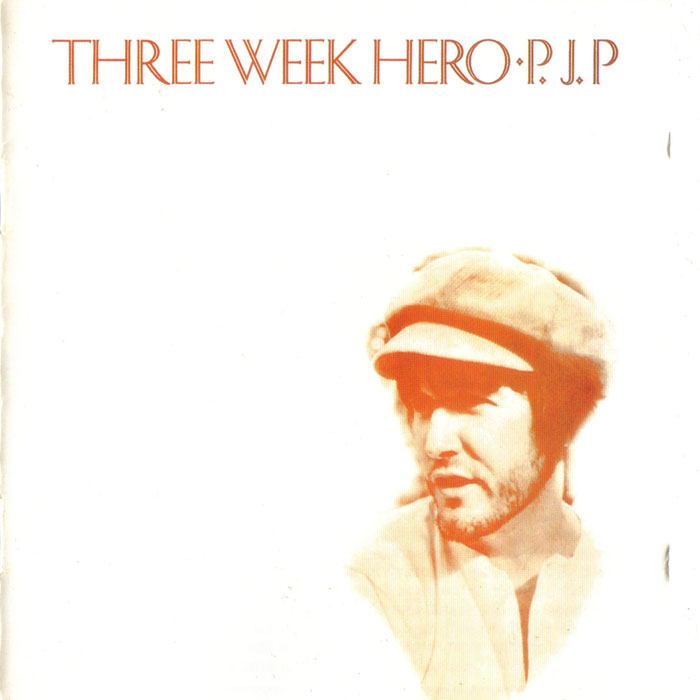
P.J. Proby - Three Week Hero 1969

 id=As a rule, P.J. Proby albums cut much later than 1966 are to be avoided like the most virulent plague imaginable. And based on the singing here, an awkward mix of vaguely bluesy and country-ish rock, interspersed with excessively dramatic pop ("Reflections of Your Face"), none of which is going to make anyone forget Chris Farlowe, never mind Steve Marriott or Terry Reid, Three Week Hero shouldn't rate much better than that. What sets it apart, and makes it worth writing about, is the fact that John Paul Jones, Jimmy Paige (sic), Robert Plant, and John Bonham are at the center of Proby's studio band, albeit augmented by Clem Cattini (drums), Alan Parker (guitars), and a slew of backup singers. There's actually not much of a Zeppelin-ish sound here, but the release date puts the making of this record within the historical framework of Led Zeppelin. For completists, that may make it an important acquisition. And if they can get past over-orchestrated dreck like "Little Friend," noisy, annoying crap like "Empty Bottles," and the awful Johnny Cash impression "Today I Killed a Man," they may enjoy the medley of "It's So Hard to Be a Nigger/Jim's Blues/George Wallace Is Rollin' In This Mornin'," on which Page, Plant, and company at last strut their stuff -- although one wishes they'd cut it with Plant singing. AllMusic.

listen here

FR style= / USA style= / UK style=
Paul McCartney & Wings - Venus And Mars 1975

 id=Band on the Run was a commercial success, but even if it was billed as a Wings effort, it was primarily recorded by Paul, Linda, and Denny Laine. So, it was time to once again turn Wings into a genuine band, adding Joe English and Jimmy McCulloch to the lineup and even letting the latter contribute a song. This faux-democracy isn't what signals that this is a band effort -- it's the attitude, construction, and pacing, which McCartney acknowledges as much, opening with an acoustic title track that's a salute to arena rock, leading to a genuine arena rock anthem, "Rock Show." From that, it's pretty much rocking pop tunes, paced with a couple of ballads and a little whimsy, all graced with a little of the production flair that distinguished Band on the Run. But where that record was clearly a studio creation and consciously elaborate, this is a straightforward affair where the sonic details are simply window dressing. McCartney doesn't really try anything new, but the songs are a little more varied than the uniform, glossy production would suggest; he dips into soft-shoe music hall shuffle on "You Gave Me the Answer," gets a little psychedelic with "Spirits of Ancient Egypt," kicks out a '50s rock & roll groove with "Magento and Titanium Man," and unveils a typically sweet and lovely melody on "Listen to What the Man Said." These are a slight shifts on an album that certainly feels like the overture for the arena rock tour that it was, which makes it one of McCartney's more consistent listens, even though it's possible to scan the song listing after several listens and not recognize any song outside of "Listen to What the Man Said" and the opening medley by title. Allmusic.

listen here

FR style= / USA style= / UK style=
Om - Om 1971

 id=Try this excellent psychedelic rock band with some jazz touch from Spain. Hard to find.

listen here
The Ohio Players - Observations In Time 1967

 id=In the '60s, you didn't have to live in the Deep South to have a Southern R&B sound. Aretha Franklin lived in Detroit, but many of her '60s recordings favored the rawness and toughness of Southern soul over the sleeker, more pop-influenced soul that was coming out of Detroit as well as Chicago and Philadelphia. And even though the Ohio Players were from Dayton, many of their early recordings sound like they could have been recorded in Memphis. Produced by Johnny Brantley in New York, Observations in Time is full of songs that would have been perfect for a Sam & Dave or Rufus Thomas session; there is no shortage of Southern-style grit on "Street Party," "The Man That I Am" or the single "Here Today and Gone Tomorrow" (which was a minor hit). However, some of these 1968 recordings hint at the type of jazz-influenced experiments that the Players would provide at Westbound in the early '70s. The jazz influence is strong on imaginative versions of the standards "Over the Rainbow" and "Summertime," and "Cold Cold World" is the sort of jazz/blues item that one would have expected from Lou Rawls, Jimmy Witherspoon, or Bobby "Blue" Bland in the '60s. So even though the Players offer a lot of Southern-minded R&B on Observations in Time (which was their only album for Capitol), they aren't afraid to branch out and try some other things. Thankfully, this album was reissued on CD in the '90s. AllMusic.

listen here

FR style= / USA style= / UK style=

quarta-feira, 11 de agosto de 2010

Chicago Transit Authority - Chicago Transit Authority 1968

 id=Few debut albums can boast as consistently solid an effort as the self-titled Chicago Transit Authority (1969). Even fewer can claim to have enough material to fill out a double-disc affair. Although this long- player was ultimately the septet's first national exposure, the group was far from the proverbial "overnight sensation." Under the guise of the Big Thing, the group soon to be known as CTA had been honing its eclectic blend of jazz, classical, and straight-ahead rock & roll in and around the Windy City for several years. Their initial non-musical meeting occurred during a mid-February 1967 confab between the original combo at Walter Parazaider's apartment on the north side of Chi Town. Over a year later, Columbia Records staff producer James Guercio became a key supporter of the group, which he rechristened Chicago Transit Authority. In fairly short order the band relocated to the West Coast and began woodshedding the material that would comprise this title. In April of 1969, the dozen sides of Chicago Transit Authority unleashed a formidable and ultimately American musical experience. This included an unheralded synthesis of electric guitar wailin' rock & roll to more deeply rooted jazz influences and arrangements. This approach economized the finest of what the band had to offer — actually two highly stylized units that coexisted with remarkable singularity. On the one hand, listeners were presented with an incendiary rock & roll quartet of Terry Kath (lead guitar/vocals), Robert Lamm (keyboards/vocals), Peter Cetera (bass/vocals), and Danny Seraphine (drums). They were augmented by the equally aggressive power brass trio that included Lee Loughnane (trumpet/vocals), James Pankow (trombone), and the aforementioned Parazaider (woodwind/vocals). This fusion of rock with jazz would also yield some memorable pop sides and enthusiasts' favorites as well. Most notably, a quarter of the material on the double album — "Does Anybody Really Know What Time It Is?," "Beginnings," "Questions 67 and 68," and the only cover on the project, Steve Winwood's "I'm a Man" — also scored as respective entries on the singles chart. The tight, infectious, and decidedly pop arrangements contrast with the piledriving blues-based rock of "Introduction" and "South California Purples" as well as the 15-plus minute extemporaneous free for all "Liberation." Even farther left of center are the experimental avant-garde "Free Form Guitar" and the politically intoned and emotive "Prologue, August 29, 1968" and "Someday (August 29, 1968)." The 2003 remastered edition of Chicago Transit Authority offers a marked sonic improvement over all previous pressings — including the pricey gold disc incarnation. AllMusic.

listen here

FR style= / USA style= / UK style=

terça-feira, 10 de agosto de 2010

Paul Jones - Crucifix In A Horseshoe 1971

 id=As lead singer of Manfred Mann during their early run of hits such as "Doo Wah Diddy Diddy," "Pretty Flamingo," and many, many others, Paul Jones was far more influential than people realize. Artists such as Arthur Lee have cited him as a primary influence, and for that fact alone, he should be recognized. After leaving Mann in 1966, Jones made one of the greatest cult films of all time, 1967's Privilege. This, though, his solo debut, is another step altogether. Always one of the more literate rockers of his era, Jones spends most of his time on this album making fun of stardom and all that goes with it. Hotel rooms, groupies, and the general grind of it all is the subject matter here, and it's all quite a bit of fun. As far as the music goes, much of it is more laid-back than anything Jones did with Manfred Mann, with a lot of country leanings. Thomas Jefferson Kaye's production is a bit heavy-handed -- which is not much of a suprise. But in the end, it is an interesting record, sounding very much like a roots-oriented David Bowie record, slashing the tires of a car named "stardom." AllMusic.

listen here

FR style= / USA style= / UK style=