quarta-feira, 25 de agosto de 2010

John Coltrane - Interstellar Space 1967

 id=Not released for the first time until 1974 but now available in expanded form as a CD, this set of duets by tenor saxophonist John Coltrane and drummer Rashied Ali are full of fire, emotion and constant abstract invention. The original four pieces ("Mars," "Venus," "Jupiter" and "Saturn") are joined by "Leo" and "Jupiter Variation." Coltrane alternates quiet moments with sections of great intensity, showing off his phenominal technique and ability to improvise without the need for chordal instruments. Rousing if somewhat inaccessible music. AllMusic.

listen here

FR style= / USA style= / UK style=
Howard Roberts - Antelope Freeway 1971

 id=Howard Roberts was a talented guitarist on the level of a Barney Kessel or Herb Ellis, who spent most of his career playing commercial music in the studios. Shortly after he moved to Los Angeles in 1950, Roberts was firmly established in the studios, although on occasion he recorded jazz (most notably twice for Verve during 1956-1959, a Concord session from 1977, and one for Discovery in 1979); however, most of his other output (particularly for Capitol in the 1960s) is of lesser interest. The co-founder of the Guitar Institute of Technology in Hollywood, Roberts was an enthusiastic and talented educator, and wrote a regular instructional column for Guitar Player. AllMusic.
"Here is an interesting jazz/rock road album from guitarist "Howard Roberts". "Antelope Freeway" incorporates lots of trippy outdoor sounds and psychedelic influences with a mixture of humor and artistic expression. I have also kept both sides of the album wrapped as it flows much better and would spoil the feel of each 20 minute side. I hope you like it, as I did." Thanks to Chuntao from
www.raremp3.co.uk


listen here

USA style= / UK style=
Next - Dust Shoes 1971

 id=
Winnipeg's Next were an offshoot of regional heroes The Fifth. After a fairly successful run of singles in Canada, The Fifth split in 1970 with several members of the band defecting to other acts in the region. One such product of the split was Next. The band were quickly able to secure a contract with Warner Brothers and by late 1971, "Dusty Shoes" was released. With somewhat limited exposure and very poor distribution, the album sank without a trace and Next were history by the end of 1973. Members would later turn up in The Guess Who, Harlequin and The Litter.

"Dusty Shoes" is very much typical of the era from which it sprang. Overall, it's tastefully arranged organ/guitar driven pseudo hard rock that recalls Grand Funk Railroad quite a bit in places. With the soulfully gritty vocals of George Belanger, everything here has an edge which makes much of the material here sound harder than it actually is. That subtle dynamic is what carries most of this album and makes it a truly satisfying listen. Check out this obscure offering from Next, contributed by Orchman. Thanks for robotsforronnie.blogspot.com.

listen here
Gallagher & Lyle - Seeds 1973

 id=Gallagher & Lyle beef up their folk-based sound from previous albums on this recording produced by Glyn Johns. The duo adds several uptempo cuts in a more rock-oriented vein, using saxophone on the opening and most rock-oriented cut, "Country Morning." Harmonicas add energy to the second song, the uptempo "A Misspent Youth," one of several songs with a social edge. Both Gallagher and Lyle have thin voices, but on songs which have an edge of melancholy, such as "Remember Then," and "The Clearings," (two of the outstanding tracks) the voice quality lends itself to good effect. Although many songs on the album deal with regret or loss, there are several which tip the balance in favor of upbeat moods and feeling. Also, melodies and arrangements are strong throughout the album. Side One is particularly effective, with each song having a particular mood of its own. Although Gallagher & Lyle headed more into mainstream rock production values with their next effort, this transitional effort is their best album overall. AllMusic.

listen here

FR style= / USA style= / UK style=
Ferré Grignard - Captain Disaster 1968

 id=Belgium skiffle-singer who surprised the world in 1965 with his international hit "Ring ring, I've got to sing".

Started of at the art academy, went to the USA (where he went to live in the negro ghetto's) and was expelled from there (for being an anarchist). When he came back to the cosmopolitan port Antwerp, he went to live in a mansion, the birthplace of Peter Benoît, where he made music, painted and partied with the 20 friends who lived with him and literally spent all his money at once.he was discovered by Hans Kusters (Yup, that's the same man who has the record company HKM that's now producing the music of the likes of Clouseau) in an Antwerp bar and the first "Jazz-festival" at Bilzen.


His debut album (Ring-ring) conquers the world with its powerful mixture of skiffle, folk-songs and improvised blues music.
From the book "Wit-lof from Belgium" : "After that famous first album and the ensuing international success, things started to go wrong and would continue to go wrong after that. Because Johnny Hallyday had a hit with one of his songs without paying the royalties, Grignard changed record-companies from Philips-France to Barclay. But the first Barclay-album "Captain Disaster" (he asked for it) didn't do as well as expected. A comeback at the beginning of the seventies failed, as did another come-back-again at the end of the seventies."

His manager recalls : "The success in 1966 came too suddenly. He enjoyed it too recklessly. He went to live in a mansion, the birthplace of Peter Benoît, where he made music, painted and partied with the 20 friends who lived with him. When he was paid 10.000 fr. for a gig on Saturday, he would come begging for 100 fr. on Monday to buy some bread. He also systematically refused to fill in his tax-forms, so after a while all royalties went directly to taxes. One big mess".

He died in Antwerp of throat cancer in 1982 (at that time he was living on an attic without heating, surrounded with empty bottles)

After his death however, his influence has continued to live on : many in the Antwerp scene (groups such as dEUS & Zita Swoon) cite Ferre Grignard as one of the influences on the way they make music. Belgian blueslegend Roland Van Campenhout recorded a version of "Hash Bamboo Shuffle" in 1998 for his cover-album "Waltz", citing Ferre Grignard & the Muze as one of the reasons he started making music back in the sixties.

listen here

FR style= / USA style= / UK style=
Lumbee - Overdose 1970
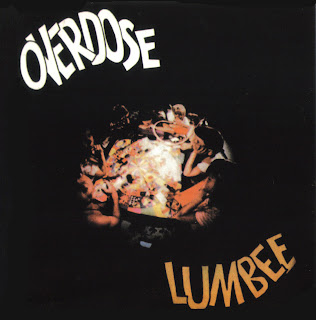
 id=Their sole LP was originally accompanied by a board game that had, as its central objective, the establishment of a worldwide dealership, from which players started out selling marijuana before graduating, eventually, to acid. Unfortunately, that gimmick along with the group's atypical interracial makeup was really the most fascinating attribute of Lumbee's sole album, which was largely a collection of lumbering southern blues-based rock songs with only brief flashes of inventiveness.

Taking its name from a Native American tribe located near Lumberton, NC (their native state), Lumbee began as the wonderfully monikered Plant and See, which released a late-'60s album on the Turtles' record label, White Whale. The makeup of the band was a curious anomaly for the era: leader William French Lowery was of Native American ancestry; his wife and the group's singer Carol Fitzgerald was Scotch-Irish; drummer Forris Fulford was Black; and bassist Ronald Seiger was Hispanic. A single from the album was rising up the charts at the time White Whale folded, ending any chance of the national success it might have had and leaving the band without a record deal and, due to legal ramifications, its band name. With the loss of Seiger and the addition of rhythm guitarist Rick Vannoy and new bass player Bobby Paul, Plant and See regrouped under the name Lumbee in 1970. Soon thereafter they were in the studio cutting Overdose, so named as a tribute to three rock stars (Janis Joplin, Jimi Hendrix, and Jim Morrison) who had recently succumbed to drugs. The album was quite controversial at the time due to its unique doper board game and its cover sleeve, which portrayed children playing said game. A single from the album, "Streets of Gold," rose to the top of various regional charts, and the band played with such well-known acts as the Allman Brothers Band. Shoddy management, however, soon led to disillusionment and eventual dissipation. Lumbee wasn't, as the opening song on Overdose suggests, tone deaf, but their music wasn't particularly tuneful either, meaning there isn't really anything on this straight CD reissue that you can live without. Even hardcore fans of '70s hard rock will find the songwriting largely undistinguished and the recording surprisingly lacking in excitement. The band seems unable to muster up a high level of energy, and as a result, the songs have a tendency to sink into plodding, Southern blues-by-the-numbers rock. Despite the dynamic multicultural makeup of the band, the music doesn't manage any sort of unique angle or edge, which is a genuine disappointment. The album does have its merits. Lumbee erupts into a sizzling but far-too-brief jazzy break toward the end of "People Get Ready," which segues directly into "You Gotta Be Stoned," a lumbering but tripped-out psychedelic jam. The single, "Streets of Gold," has an inviting, back-to-the-country gait, and Carol Fitzgerald Lowery's hard rock hollering on the strong blues "Whole World Is Down on Me" recalls Janis Joplin, although it can also descend into affectation at times. Each of the other songs has some truly nice bits of interplay and stretches where the band hits upon nice grooves that make you wonder how impressively this music might have come off in a ballroom or club setting. But at only about 33 minutes, it still manages to feel like a bit of an overdose, which certainly isn't the highest recommendation possible. AllMusic.

listen here

FR style= / USA style= / UK style=
Fairport Convention - Fairport Convention 1968

 id=By far the most rock-oriented of Fairport Convention's early albums, this debut was recorded before Sandy Denny joined the band (Judy Dyble handles the female vocals). Unjustly overlooked by listeners who consider the band's pre-Denny output insignificant, this is a fine folk-rock effort that takes far more inspiration from West Coast '60s sounds than traditional British folk. Fairport's chief strengths at this early juncture were the group's interpretations, particularly in the harmony vocals, of obscure tunes by American songwriters such as Joni Mitchell, Bob Dylan, Emitt Rhodes, and Jim & Jean. Their own songs weren't quite up to that high standard, but were better than many have given them credit for, with "Decameron" and "Sun Shade" in particular hitting wonderfully fetching melancholic moods. It's true that Fairport would devise a more original style after Denny joined, but the bandmembers' first-class abilities as more American pop-folk-rock-styled musicians on this album shouldn't be undersold. [The 2003 CD reissue of this record adds four bonus tracks from outtakes, TV performances, and non-LP singles of the era, as well as historical liner notes.] AllMusic.

listen here

FR style= / USA style= / UK style=